Use this thread to discuss unglue.it in general. If you have bugs to report, please us the “Feedback” button on the rights side of every unglue.it page- that captures some info that helps us reproduce any issues, and will generate a quicker response.
Anonymous pledges and premiums
An ungluer writes:
Where can I comment on the general principles of how unglue.it functions?
We’ll open a discussion thread on this blog. After this.
I ask because I did not find a comment section on the FAQ or any FAQ entry on how various sizes of donations are acknowledged.
I know that many people are motivated to donate by that their donations are acknowledged by name and by that the (major) donors get some special memento. However, at the moment the wording of the “Support” field (to the right on each book’s page -> ->) gives the impression that a donator *must* accept both the publishing of their name and, in case of larger donations, a printed book, regardless of whether they personally happen to love or abhor either type of acknowledgement.
I happen to be seriously DEmotivated by the supporter perks as they are currently worded. I absolutely do not want my name published in a manner that pretty exactly reveals how much or little I have donated for each book project (I’m a privacy nut concerning my finances and likely to remain so, seeing as I’m soon to be 50). And I definitely do not want any more dead trees in my home unless I am forced to get one that is not available as a (preferably DRM-free) e-book, due to study or business reasons (I have been actively getting rid of paper books and exchanging them to e-book versions whenever possible since 2008).
Therefore, solely due to the appearance/tone of the Support perks, any donations above 24 USD are totally out of the question for me now.
Surely this was not an intended effect of the Support column, even if this particular effect would concern only a minority of potential donators?
Surely a way can be found for a donator to stay completely anonymous? Surely a way can also be found for an anonymous or a named donator to politely refuse a printed book – e.g. to donate that particular copy to a lottery that benefits unglue.it?
I hope a solution will be found. Unglue.it is a wonderful initiative and deserves to attract every possible donator, regardless of their attitudes about privacy, ethical and/or religious convictions regarding public philanthropy, willingness and/or ability to designate physical space for paper books, or whether they happen to be egregiously extroverted or excruciatingly shy (just to name a few dimensions along which people who find Unglue.it a worthy cause can vary).
There are a couple of answers, as there are many aspects to anononymity.
First of all, you don’t have to select a “premium” (perks) at all- just click the “support” button and fill in an amount.
Second, it seems we lost our “anonymous pledge” checkbox. Since our launch, the premium selection UI is the one thing we’ve been struggling to improve, as it’s created more support issues than anything else. Somewhere along the way, the UI lost our “anonymous pledge” checkbox. Our transaction database has a column for it, but it has no effect, because it’s part of functionality that we haven’t exercised yet- our first unglued book is still on the way. We’ll post here when we update this.
Third, as you point out, there can be a conflict between a request to make a pledge anonymous and a request for a premium. So for example, if the premium requires shipping, the rights holder will need a shipping address. Our terms and conditions require rights holders to use this information only for the purpose of shipping the premium, but that’s not quite the same as remaining anonymous.
Fourth, we built the site so that you don’t have to make your identity publicly known. Your username, (not your real name) is what gets listed in an acknowledgement section. (I’m looking at the Premium descriptions and it looks like we need to make them consistent with that reality!)
Thanks for supporting us and for helping is to make Unglue.it better.
Meet Joseph Nassise
We’ve asked each of our first five rights holders to help us write a blog post introducing themselves to you — giving you a behind-the-scenes glimpse into themselves and their work. But Unglue.it staffer Andromeda was having entirely too much fun learning about Joseph Nassise, so she wrote this up herself.
You guys! Zombies.
So when I was getting to know Joe Nassise and trying to think of how to explain to you, the internet, what he’s about, I read about the new series of books he’s just launched and here’s the deal: they’re alternate history steampunk zombies.
Now if that isn’t enough, I don’t know what is. But if you just can’t get enough alternate history steampunk zombies, you can read more in Joe’s own words — he was featured on John Scalzi’s Big Idea just last week. You can even get a quick taste of his work for only $1.99, via this short story prequel. (Which features an utterly perfect cameo in the last scene, and no, I’m not telling who.)
Now this series just launched last week, so we’re not ungluing it (yet?). Joe has a long and distinguished career, including two stints as president of the Horror Writers Association and nominations for the Bram Stoker Award and the International Horror Guild Award. His work incorporates horror, sci-fi, suspense, urban fantasy — oh, and while we’re at it, graphic novels and action-adventure archaeology. We’ll be ungluing his debut novel, Riverwatch. Read more about it — and hear an audio excerpt! — at its campaign page at Unglue.it.
(Zombies! You guys!)

Joe is not a zombie.
Meet Open Book Publishers
We’ve asked each of our first five rights holders to help us write a blog post introducing themselves to you — giving you a behind-the-scenes glimpse into themselves and their work. Here’s what independent, open-access scholarly publisher Open Book had to say.
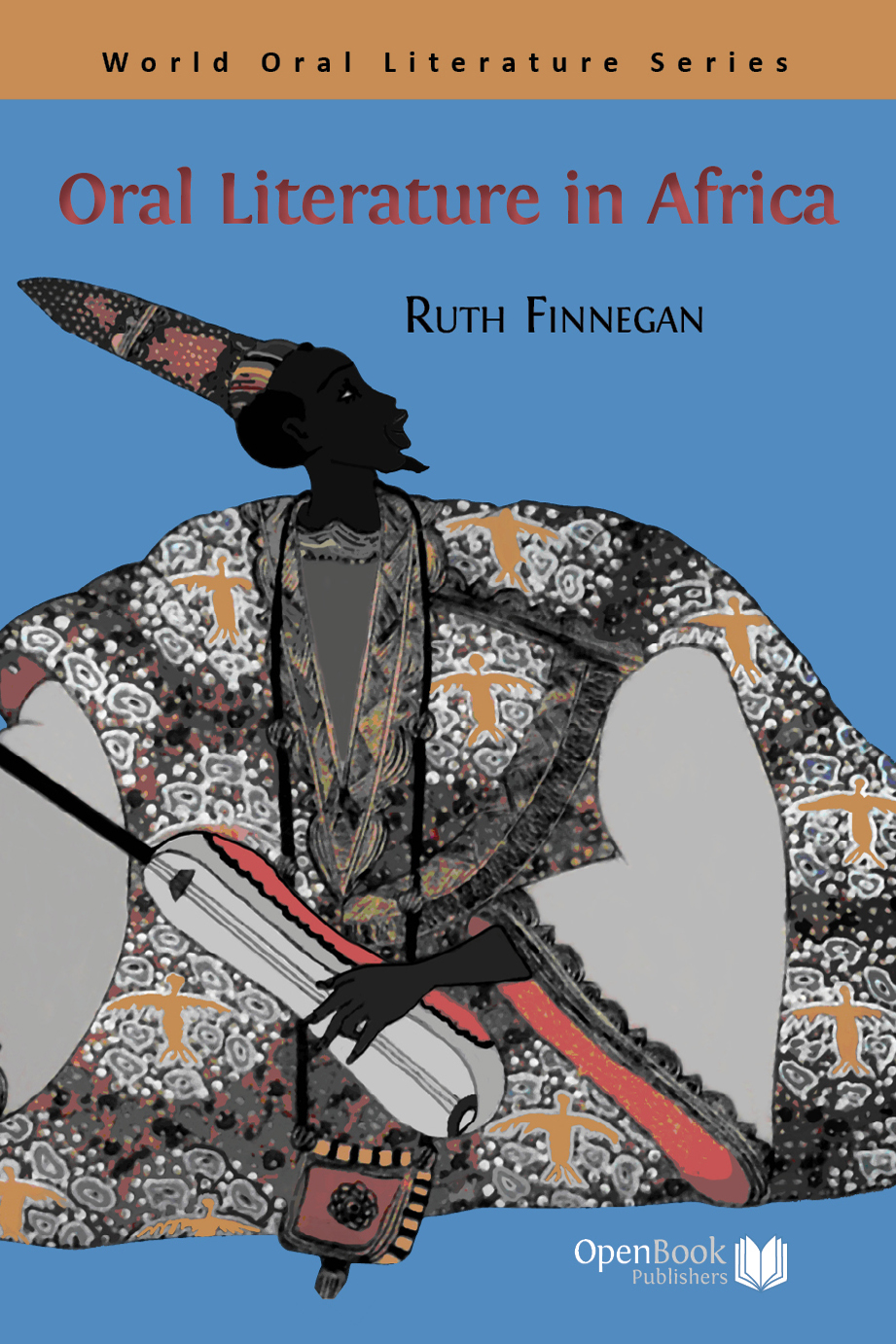
New cover art for Finnegan’s classic work, Oral Literature in Africa.
Open Book Publishers was founded in 2008 by Cambridge academics Alessandra Tosi and Rupert Gatti. The idea stemmed from Alessandra’s first hand experience of the difficulties of getting her book on a specialist area of Russian literature even considered by university presses; when it was eventually published, it had a tiny print run with an exorbitant retail price – very few people (and virtually no-one in Russia) could read the research she had worked so hard to produce. She realised that many of her colleagues were having a similar experience. There had to be a way to make academic books available to all readers.
The pair saw that many of the university presses were weighed down by tradition and basking in long-standing privileges – and that these expensive, labour-intensive publishing models were no longer necessary in the digital age. Alessandra and Rupert took the opportunity to create a new publishing house that used modern technology to reduce costs at the same time as harnessing research funding and other sources (like Unglue.it!) to make valuable research freely available to readers everywhere, regardless of their income.
Open Book Publishers has now published over twenty books across the Humanities and Social Sciences by authors including Lionel Gossman (Princeton), Maria Manuel Lisboa (Cambridge) and Nobel laureate Amartya Sen (Harvard). All are available to read for free online, in their entirely.
Since Open Book Publishers’ beginnings, people are increasingly realising the importance of making publicly-funded research freely available – we are in the midst of what the newspapers are calling an “academic spring”. We are proud to have been one of the earliest adopters of an Open Access model and to show that this model is indeed sustainable.
Despite the recent commitment by many academics and universities to switch to Open Access, funding models are slow to change. We envisage a time when all grant-giving bodies factor in a book’s dissemination into its costs but, for the moment, we often have to get our funding elsewhere.
We are very excited to be working with Unglue.it, especially with such an important classic. We have already published Ruth Finnegan’s latest book, Why Do We Quote?: The Culture and History of Quotation, and were delighted when she proposed to re-issue and unglue her masterpiece Oral Literature in Africa (see its campaign on Unglue.it here). This is an example of a book with a prohibitively high original retail price that, now that it’s out of print, is only available in well-endowed university libraries. It is a tragedy that this seminal study has been largely unavailable in Africa. We hope that ungluers realise the impact that Open Access can have, particularly in developing countries where, at last, students and researchers are beginning to have access to the same knowledge as the West.
Meet Nancy Rawles
We’ve asked each of our first five rights holders to help us write a blog post introducing themselves to you — giving you a behind-the-scenes glimpse into themselves and their work. Here’s what Nancy Rawles had to say about herself and her novel.
Love Like Gumbo is a coming-of-age story that explores what happens when the needs of an individual clash with the needs of the group. It’s what makes coming out to family such risky business, even in an age when the President supports gay marriage. Being gay (almost always) makes us different from our families in the most personal of ways. Families that are already marginalized due to color or class or religion may feel especially threatened by such a fundamental difference. That’s the case for Grace Broussard, the young lesbian at the center of Love Like Gumbo. Her struggle with forbidden love is certainly not limited to gay people.
I started writing Love Like Gumbo in Japan. I went to Japan (where the group is so important) to understand the United States and our emphasis on the individual. I thought the ideals of individuality and independence were getting in the way of my relationships. I wanted to know what it’s like to live in a place where you always have to consider everyone else. It was good for me to be in a place where nobody worried about being “co-dependent.”
When I nervously came out to my best friend in Sendai, she welcomed the news. It was a chance to divulge a secret of her own. When I grew weary of the taunts from the man who worked besides me, I told him why I wasn’t interested. Much to my surprise, his response was “Wow, the girls must be crazy about you.” Sometimes, there’s acceptance where you least expect it. Other times, there’s unbending rejection from people you count on. I try to remember that it took me a long time to accept my sexuality; I don’t expect acceptance to be automatic. If you had told me when I was young that society would change so much in my lifetime, I never would have believed it.
Read more at the campaign to unglue Love Like Gumbo.
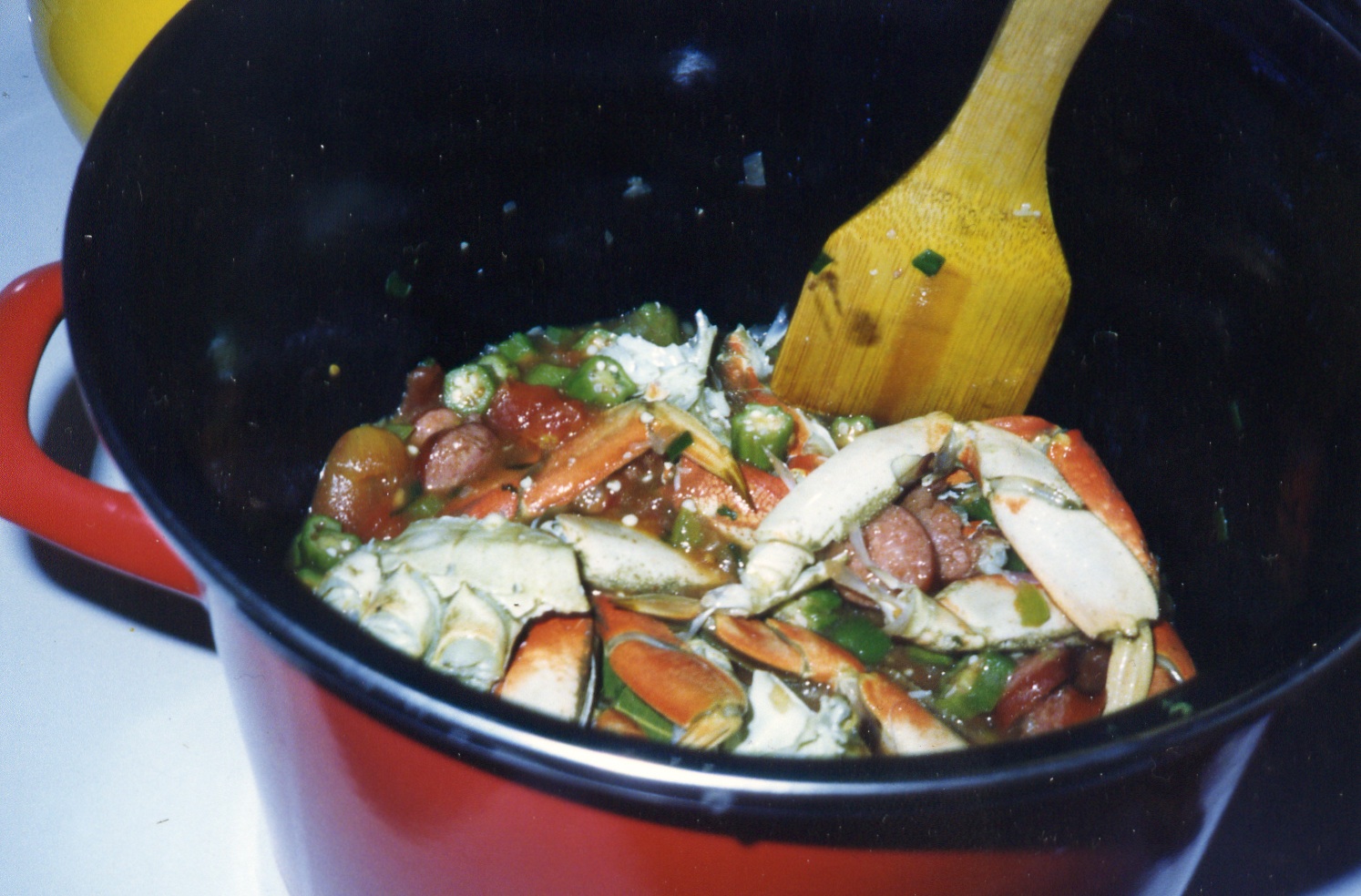
Gumbo from Nancy’s family recipe. Yum!
 unglue.it